The December Test: What the Festive Timetable Tells Us About the Other Eleven Months
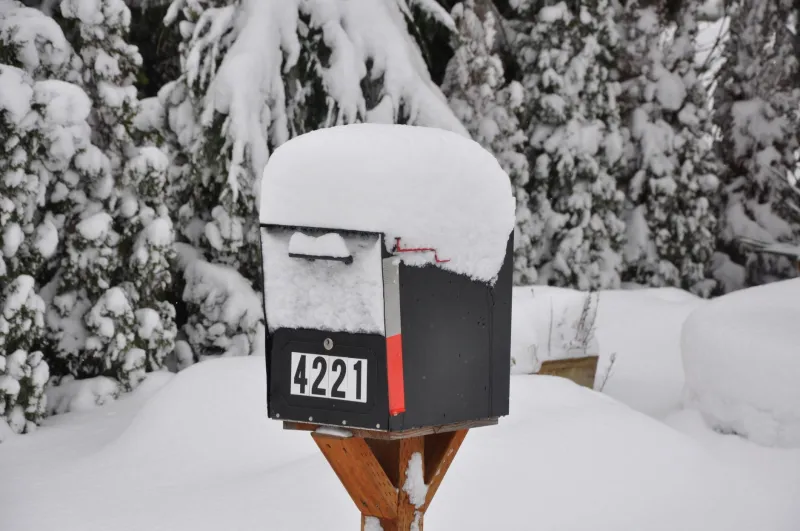
Christmas 2026 is still some weeks away, but the machinery that will deliver it is already moving. Festive posting dates have been published, temporary staff are being inducted at mail centres, and delivery offices are beginning the annual negotiation over overtime, rest days and borrowed vans. Every year the same advice appears — post early — and every year a few more households take it, not from enthusiasm but from a quiet suspicion that the network has less slack in it than it once did.
That suspicion deserves to be taken seriously. The Christmas timetable is usually read as a piece of consumer advice. It is better understood as a stress test, and the results of that test are worth examining long after the turkey has gone.
The dates worth writing down
Royal Mail's published schedule for 2026 follows the familiar shape, with the usual caveat that last collection times vary by postbox and that the company's own website remains the final authority.
- International economy and standard services: early December, with the exact date depending on destination; the slower the service, the earlier the deadline.
- HM Forces mail (BFPO): around Friday 4 December for the standard service.
- 2nd Class and 2nd Class Signed For: Friday 18 December.
- 1st Class and 1st Class Signed For: Monday 21 December.
- Special Delivery Guaranteed: Wednesday 23 December.
- Parcelforce Worldwide express services: 23 to 24 December, depending on the product chosen.
Anyone sending to a relative overseas, or posting to a serving family member, should check the specific route rather than rely on a general figure. Cards posted on the deadline are not guaranteed to arrive before Christmas Day in any case; the dates indicate when Royal Mail expects to clear the volume, not a promise that every item will land on a doormat in time for the pudding.
Why the cut-off seems to creep earlier
A posting deadline is not the date on which Royal Mail begins to handle Christmas mail. It is the date by which the system can still absorb it. Those two things are often confused, and the gap between them is where the story sits.
When a network has spare capacity, a late item can be recovered: sorted overnight, trunked to a second centre, pushed out on a second run. When capacity is tight, there is no recovery, so the deadline moves earlier to protect the promise. A cut-off date is therefore a fairly honest public statement about how much room for error the operator believes it has. Seen that way, the timetable is a useful annual indicator — not of demand, which is broadly predictable, but of resilience.
Inside the depot in December
In the weeks before Christmas, delivery offices run on three things: temporary staff, overtime and goodwill. Seasonal recruits learn the round in a matter of days, often working alongside a regular postie who is carrying a larger share of the walk than usual. Sunday and evening parcel sorting becomes routine. Vans are borrowed, rounds are split, and managers who spend most of the year being told to hold costs are, for a few weeks, permitted to spend.
The result usually holds. Most mail does arrive. But it arrives because the system is being worked harder rather than because it has been resourced more generously, and the people doing the working notice the difference. Postal workers we hear from describe December less as an emergency than as an intensification of the ordinary — the same rounds, the same offices, the same equipment, with a third more volume pushed through them.
The signal buried in the scramble
If a network can only clear its busiest month by suspending the rules it applies for the other eleven, that tells you something about how those other eleven are staffed. Capacity is sized for an average week. The peak is absorbed by overtime, temporary labour and the accumulated local knowledge of experienced staff. Remove any one of those and the machine begins to slip — which is precisely what residents report in January and February, when the backlog does not clear as quickly as it once did.
None of this is an argument that Royal Mail is failing at Christmas. It is an argument that Christmas is the only month in which the strain is visible, and that a service which requires exceptional measures to function normally in December is a service operating close to its limit in March.
A practical checklist before you post
- Post earlier than the deadline, not on it. A two-day buffer costs nothing and removes most of the risk.
- Check your postbox's last collection time. These have changed in many areas; the plate on the box is the only figure that matters locally.
- Use the full postcode. Incomplete addresses slow the whole round, not just one item.
- Keep proof of posting. It is free and it is the basis of any claim.
- Send valuables by a tracked or signed service. Cards and cash deserve better than a standard stamp.
- Photograph contents and packaging before sealing, particularly for parcels.
- Consider Parcelforce or a tracked parcel service for anything bulky or urgent.
- Allow extra time for rural addresses, where the final mile is longer and more weather-dependent.
Holding the service to account
If something goes wrong this December, the most useful thing you can do is record it precisely: the date posted, the date delivered, the office or postcode area, and the reference number. Patterns matter more than individual complaints, and a diary of delays in one street is evidence in a way that a single frustrated phone call is not.
It is also worth asking your local delivery office, politely and in writing, what its staffing arrangements are for the peak period, and whether last collection times in your area have changed this year. Those questions are reasonable, they are answerable, and the answers tend to be more candid than anything published centrally.
Christmas is the moment when the country notices its postal service. The rest of the year, it is easy to assume someone else is paying attention. The festive timetable is a reminder that the two things are connected — and that a network which needs a sprint to finish December is one worth watching in the quieter months.