Ask Before They Shut: Seven Questions to Put to Your MP About Access Points
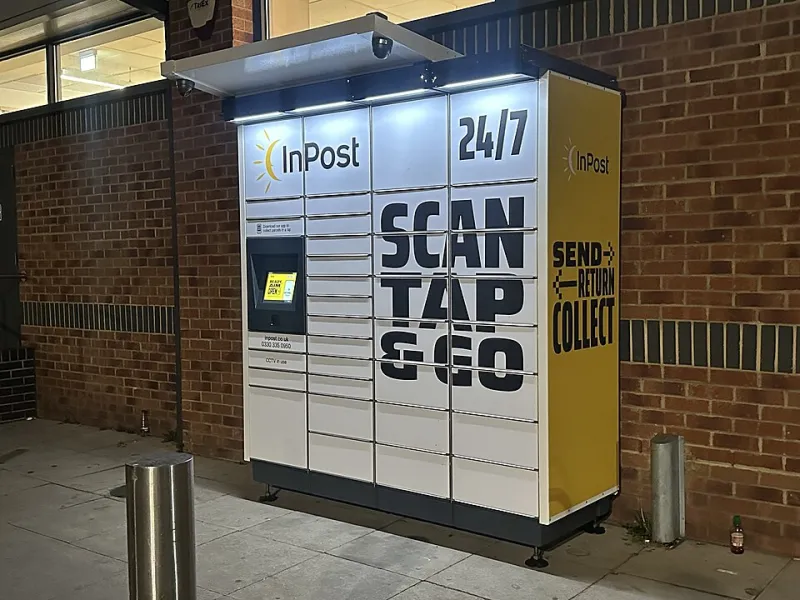
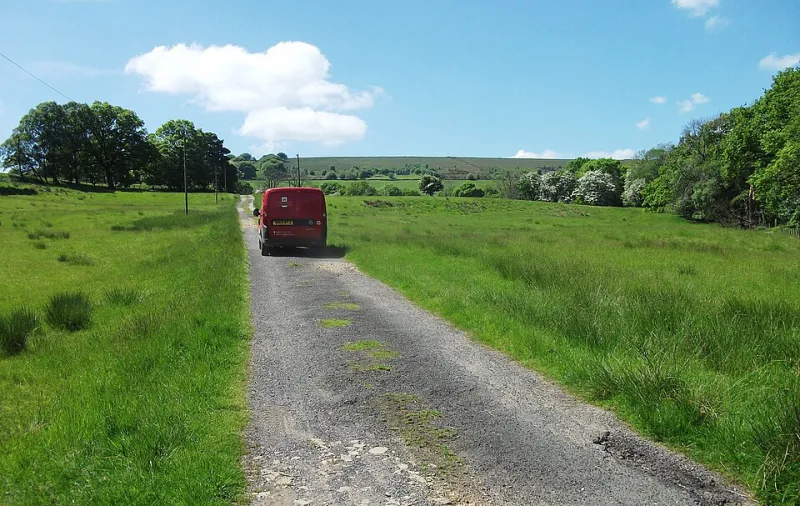
Photo: Sunolafjagtenben-hur, CC0, via Wikimedia Commons
Something is changing in the way post reaches your street, and it is rarely announced as a closure. A delivery office becomes an “access point”. A staffed counter becomes a locker bank beside a supermarket. A service that once came to the door is reframed as a service you travel to. The vocabulary shifts first, then the distances.
This guide is for anyone who suspects that is happening in their constituency. It is deliberately practical. Each question below explains why it matters, what a satisfactory answer looks like, and what should make you push harder.
First, know what “access point” means
An access point can be a Post Office counter, a Royal Mail delivery office, a parcel locker, or a counter in a convenience store or petrol station operating under a third-party arrangement. These are not interchangeable. A locker takes parcels; it does not handle letters, give advice, verify identity documents or let an elderly customer speak to a human being about a missing pension letter.
When a local service is “converted to an access point”, ask which type. The answer usually reveals how much has actually been lost.
Question 1: How many access points serve my constituency, and how far must the furthest household travel?
Why it matters: averages hide rural reality. A constituency may have ten access points, all within three miles of the town centre, while outlying villages are twelve miles from any of them.
A good answer gives a map, a list of postcodes, journey times by public transport, and the number of households beyond a defined distance threshold.
Red flags: talk of “coverage” without geography, or a figure measured in straight-line miles rather than actual journeys.
Question 2: What did local service performance look like before and after the change?
Why it matters: conversions are often justified by poor performance at the site being closed, with no baseline published for the new arrangement.
A good answer supplies on-time delivery figures, missed-delivery rates, queue times at counters, and complaint volumes for the delivery office area, covering at least twelve months before and after.
Red flags: confidentiality cited as a reason to withhold data that is already collected internally.
Question 3: Who was consulted, and what did they say?
Why it matters: “stakeholder engagement” frequently means a briefing to a council officer rather than a conversation with residents who use the service daily.
A good answer names the bodies consulted — parish councils, disability groups, business associations, patient representative groups — summarises their responses, and explains what changed as a result.
Red flags: consultation described only in the past tense, or a summary with no dissenting voices in it.
Question 4: What accessibility test was applied to the new site?
Why it matters: a counter inside a shop that closes at 5pm and has two steps at the entrance is not equivalent to a delivery office with level access and staffed assistance.
A good answer confirms step-free access, lighting, parking, bus routes, opening hours, hearing loop provision, and whether staff can assist customers with limited mobility or without a smartphone.
Red flags: an accessibility statement that describes the building rather than the journey to it.
Question 5: What happens to customers who cannot use a locker or travel?
Why it matters: the people most dependent on the post — older residents, disabled customers, those without internet access — are the least able to absorb a longer journey.
A good answer sets out a named alternative: doorstep redelivery, a local collection arrangement, or a nominated neighbour scheme, with a clear route for complaints that reaches a human being.
Red flags: “customers can use the app” offered as the complete response.
Question 6: What are the terms of the third-party arrangement, and what happens if the shop closes?
Why it matters: access points hosted by small retailers are only as stable as the retailer. A closure can remove a service overnight with no notice period for the community.
A good answer describes the contract length, service standards, penalties for withdrawal, and the contingency plan for a replacement site — including how quickly it would be stood up.
Red flags: commercial confidentiality used to shield the absence of any contingency at all.
Question 7: Does this change affect delivery days, or only collection?
Why it matters: a collection point conversion can be the first step in a wider revision of rounds, which may later be used to justify reducing delivery frequency. Communities should know whether the change is isolated or part of a pattern.
A good answer states plainly whether delivery rounds, staffing levels and Saturday operations are affected now or planned to be.
Red flags: a reassurance about the present with no commitment about the future.
Your template email
Dear [MP name],
I am a constituent in [town or village]. I am writing about changes to postal services in our area, specifically the conversion of [site name] and the resulting reliance on access points.
Before any further changes are approved, I would ask you to press for the publication of local service data for our constituency: the number and type of access points, journey distances for households, delivery performance before and after recent changes, and the accessibility assessment for each new site.
Residents are being asked to accept a different service without seeing the evidence that it is equivalent. I would be grateful if you would raise this with Royal Mail and Ofcom and share their response with constituents.
Yours sincerely, [Your name and address]
The campaign ask
Publish local service data before any further changes. Not a national average, not a summary slide — constituency-level figures on access point type, distance, delivery performance and accessibility, released before decisions are signed off rather than after the shutters come down.
If enough constituents ask the same question in the same week, the answer changes from a courtesy reply to a casework file. That is how local pressure starts.