Signed by the Town: The Case for Keeping Local Postmarks Alive

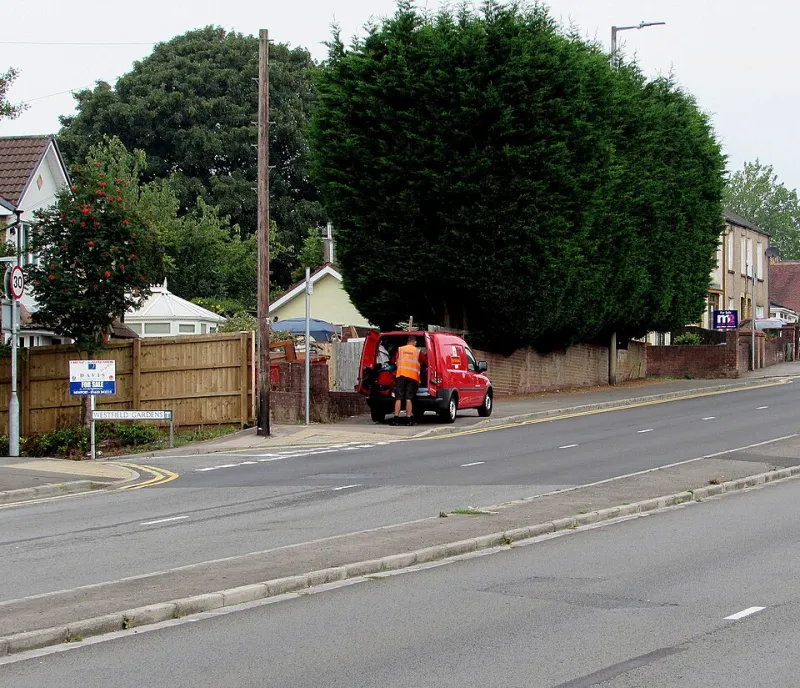
Photo: Basile Morin, CC BY-SA 4.0, via Wikimedia Commons
A postmark is easily overlooked. It sits alongside the stamp, often faint, sometimes smudged, and rarely the reason anyone opens an envelope. Yet it performs a task that no barcode can replicate: it ties a letter to a place. A postmark from a named town or village says that this item entered the mail network here, not simply somewhere in a national system. When those marks become generic, repetitive or absent, something modest but meaningful is lost from the everyday experience of using the post.
The concern is not nostalgia for its own sake. The local postmark is a working part of the service, a visible record of provenance, and, for many communities, a small but genuine expression of local identity. It is also one of the few aspects of Royal Mail that residents can directly ask for, shape and celebrate. That makes it a practical campaigning point as well as a symbolic one.
How a postmark is chosen and applied
Most mail is postmarked by machine at a mail centre. The mark may include a date, a sorting or routing element, and sometimes a slogan or promotional message. The wording is determined centrally, and the same mark can serve a wide geographical area. Handstamping still exists, particularly for items that cannot be processed by machine, for special handling, and for commemorative purposes.
Royal Mail operates a special handstamp service for commemorative postmarks, typically linked to anniversaries, events or charitable causes. Organisations and individuals can apply to have a design considered, usually with a lead time measured in months rather than days. The process is not a local democratic one; it is an administrative arrangement with criteria, capacity limits and operational considerations. But it is a route that exists, and it is used far less than it could be by community groups, heritage societies and local councils.
The quiet disappearance of named local marks is therefore not a single decision that can be reversed by one request. It is the product of centralisation, mechanisation and the pursuit of efficiency. Mail centres serve wider areas; machine processing favours uniform marks; and commemorative handstamps are exceptional rather than routine. Understanding that structure matters, because it tells campaigners where pressure can sensibly be applied.
What is lost when the mark is generic
A generic postmark does not stop a letter arriving. It does, however, flatten the relationship between mail and place. For collectors, a named postmark is a record of a specific postal geography. For local historians, it is a small archival trace. For tourism bodies and civic societies, a commemorative postmark can be a modest promotional asset — a reason to send a card from a seaside town, a cathedral city or a village with a story to tell.
There is also a service-quality dimension. A clear, legible and locally identified postmark is evidence that an item has entered the system at a particular point. When marks are faint, generic or missing, residents lose a small but useful signal about how their mail is moving. That does not prove delay on its own, but it contributes to a wider sense that the postal network is becoming less transparent and less connected to the communities it serves.
The loss is cumulative. One generic mark is not a crisis. A national drift towards uniform, machine-applied imprints is a different matter. It reflects a model in which local identity is treated as decoration rather than infrastructure. Communities are right to ask whether that model is necessary, and what it would take to preserve a meaningful local option within it.
A practical campaign for local postmarks
Residents who want to act can begin with the existing system rather than against it. The first step is to identify what already exists. Local philatelic societies, museum archives and long-standing collectors often hold records of historic postmarks from the area. Documenting those marks creates a useful civic record and a basis for any future request.
The second step is to use the commemorative handstamp route. A local heritage society, town council, library or civic trust can apply for a special postmark tied to a genuine anniversary or event. The application should be made well in advance, with a clear rationale and a realistic design. Royal Mail's special handstamp service publishes guidance on how to submit a request; community groups should read it carefully and allow for operational lead times.
The third step is to raise the issue locally. A letter to the local MP asking what discussions have taken place with Royal Mail about named postmarks and mail centre consolidation is a reasonable and specific request. So is a question to the council about whether it has considered a commemorative postmark for a civic anniversary. These are modest asks, but they put the issue on record.
The fourth step is to use the post. A campaign that asks residents to send a letter or card bearing a local commemorative postmark demonstrates demand in the most direct way available. Schools, libraries and community groups can take part. The point is not to romanticise the postmark but to show that local identity and a reliable postal service are connected concerns, not separate ones.
A small mark with a wider point
The campaign for local postmarks is not a substitute for the larger argument about access points, delivery times and staffing. It is, however, a useful entry point. It asks a simple question: should the mail network retain any visible connection to the places it serves? A named postmark is a modest answer, but it is an answer that residents can see, request and defend.
In 2026, as consolidation and mechanisation continue to reshape the postal landscape, that question deserves to be asked clearly. Communities that value their local mark should say so, use the routes that exist, and keep a record of what disappears. The vanishing postmark is a small thing. But small things, repeated across the country, become the character of a service.