Reception Is Not a Letterbox: Auditing Postal Access in Care Settings
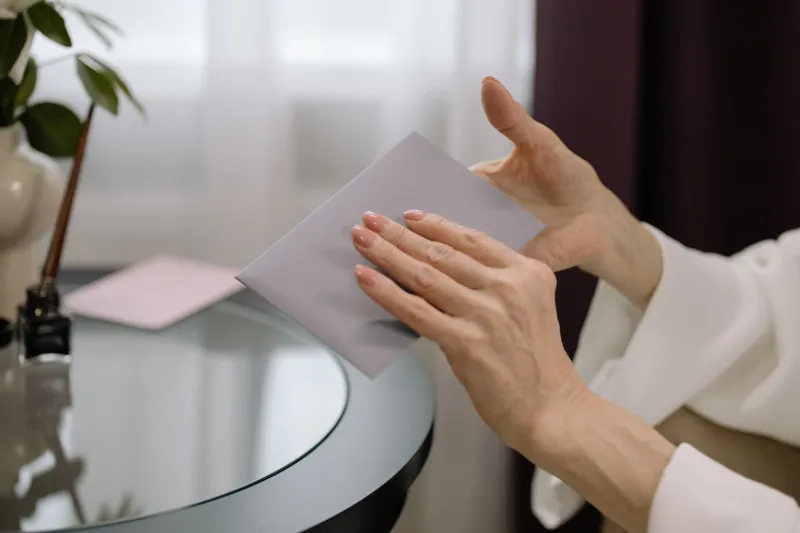
For most households, postal access is easy to describe: a letterbox, a doormat and a walk to the nearest postbox. For many care home residents, sheltered housing tenants and disabled people, the reality is a chain of people and places. A letter may arrive at a reception desk, be sorted by staff, carried to a room and handed over during a shift change. An outgoing bill may wait for a relative’s visit. A redelivery notice may sit in an office tray because the person named on it cannot reach the delivery office. As of 11 November 2026, this chain deserves the same scrutiny as the pillar box on the high street.
Why the last mile ends at the front desk
Care settings are not simply private homes with more rooms. They are workplaces, communal buildings and, for many residents, the whole of their immediate world. A care home may have one main entrance, a secure door, a signing-in system and a receptionist who is not employed by Royal Mail. Sheltered housing may have a communal lobby with numbered pigeonholes, but no guarantee that post reaches the right person promptly. A disabled person living independently may rely on a carer to reach a postbox that is no longer on the nearest corner.
The last mile is usually imagined as the distance from a delivery office to a front door. In these settings, the last mile is the distance from the front door to the resident. That distance can be short in metres and long in practice. It can depend on staffing levels, privacy rules, mobility, sensory impairment and whether anyone has explained how redelivery works. Postal access is therefore not only a question of infrastructure. It is a question of care, dignity and reasonable adjustment.
Three pressure points: closures, collections and redelivery
Any local audit should begin with the three changes that most directly affect these households.
Access point closures. When a post office or parcel point closes, the effect is not measured only in miles. It is measured in staff time, taxi fares, wheelchair accessibility and whether a resident can queue. A care home manager may be able to send a member of staff to a town centre branch, but that member of staff is then not providing care. A sheltered housing tenant may be able to reach a new counter by bus, but only if the bus stop is step-free and the driver waits. Campaigners should record not just the distance to the nearest alternative but the practical journey: opening hours, staffing, queueing, hearing loops, seating and step-free access.
Collection-time changes. Outgoing mail is often the forgotten half of postal access. If the last collection from a nearby postbox moves earlier, a care home’s afternoon post run may miss it. Staff rotas are not built around postal deadlines. A relative who visits after work may find that the box has already been emptied. For a resident waiting for a hospital appointment, a benefit letter or a family photograph, that timing matters. Local audits should compare published collection times with the actual routines of care settings and sheltered housing schemes. A box that is emptied at 9am is not useful to a care worker who cannot leave the building until midday.
Redelivery rules. Items that need a signature, or that are too large for a communal letterbox, often generate a “something for you” card. For many residents, the card itself becomes the problem. It may be left at a reception desk, placed in a pigeonhole or handed to a member of staff who does not know which resident it belongs to. The resident may not be able to book redelivery online, may not have a safe place, and may not be able to reach a delivery office. Care home staff may not know that they can request redelivery to the setting, or may be reluctant to accept responsibility for items they cannot store securely. This is exactly the kind of gap that a local campaign can document.
What an inclusive last mile would look like
An inclusive last mile does not require a nostalgic return to an earlier era. It requires clear arrangements that recognise how people actually live. Care settings should know what postal services are available to them and how to use them. Residents and families should be told, in plain English, what happens when an item cannot be delivered. Access points should be assessed for step-free access, seating and staff availability, not simply for distance. Redelivery options should include the place where a person actually lives, not only the address on a computer record.
There is also a question of consent and privacy. A reception desk is not a letterbox, and staff should not be expected to open mail or decide what is urgent. But staff can be given a clear, agreed process for handling post without taking on duties that belong to the delivery operator. Sheltered housing managers can display collection times. Families can be asked whether a resident needs help with redelivery. These are modest measures, but they turn a vague commitment to accessibility into something that can be checked.
Questions for campaigners and MPs
Local campaigners should gather evidence before making representations. The following questions can be put to Royal Mail, local authorities, care providers and MPs. They are designed to produce answers that can be compared across areas and followed up.
- How many care homes, sheltered housing schemes and supported living settings are within the delivery area, and what postal arrangements are recorded for each?
- What is the actual journey from each setting to the nearest access point, including step-free access, opening hours, staffing and public transport?
- Are collection times from nearby postboxes compatible with the routines of care staff and residents? If not, what assessment has been made of the impact?
- What redelivery options are available to residents who cannot reach a delivery office, and are care settings able to accept redelivery on a resident’s behalf?
- How are residents and families informed about redelivery, collection times and access point changes? Is information available in accessible formats?
- What reasonable adjustments are made for residents with mobility, sensory or cognitive impairments, and how are those adjustments reviewed?
- When access points close or collection times change, what consultation takes place with care providers, disabled residents’ organisations and local MPs?
- What data is collected on complaints and failed deliveries in care settings, and will it be published at a local level?
A postal audit that starts with the person
Save Our Royal Mail has consistently argued that postal services should be judged by the people who depend on them most. Care home residents, sheltered housing tenants and disabled people are not a niche interest group. They are part of every community’s last mile. A campaign that counts pillar boxes should also count the distance from reception to room, the time it takes a care worker to reach a postbox, and the number of redelivery notices that never reach the person named on them.
That is not a technical exercise. It is a test of whether postal access means anything beyond the letterbox. Local campaigners can start this week by asking care providers and sheltered housing managers what actually happens to mail when it arrives. The answers may be uncomfortable, but they will give MPs something firmer than anecdote. Reception is not a letterbox. A postal service that works for everyone should recognise the difference.