No Such Address: The Postal Gap on Britain’s New Streets
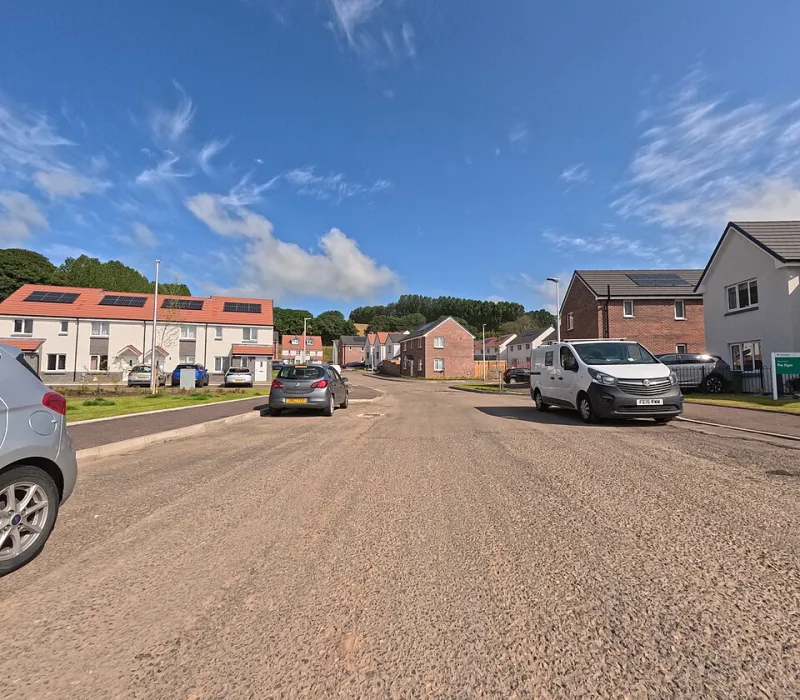
Photo: Karl Peet , CC BY-SA 2.0, via Wikimedia Commons
A new home should begin with a set of keys, a meter reading and a place on the map. In practice, it can begin with a more unsettling question: does this address officially exist? For households on recently built estates, the answer can be no — or not yet. The result is not simply a late delivery. It is a civic gap that affects correspondence, credit, council services and, in the worst cases, emergency responses.
An address is more than a line on an envelope
Most people encounter their address as a practical label: something to put on a form, a parcel or a birthday card. In fact, an address is part of the country’s administrative plumbing. It connects a property to the postal network, the electoral roll, council tax, utility records, banking checks, NHS correspondence and the emergency services. When an address is missing from the relevant databases, a household can become unusually difficult to find.
That is why the new-build address problem should not be treated as a minor administrative delay. It is a service issue with a long tail. A missing address can mean a delivery is returned to sender, an online order is refused at checkout, a bank cannot verify a customer, or a letter from a hospital never arrives. For Royal Mail’s delivery staff, it can mean a round that contains a property without a recognised delivery point.
The chain from site plan to sorting frame
The process is rarely a single failure. It is a handover problem involving several parties, each with a different role.
Developers bring forward the housing and are normally responsible for applying to the local authority for street naming and numbering. The council approves names and numbers and maintains the local address record. Royal Mail maintains the Postal Address File, known as the PAF, which underpins postal sorting and delivery. New addresses and postcodes must be notified and processed before they appear in that system. The National Address Gazetteer, maintained through GeoPlace and local authorities, provides another important reference point for public bodies.
Delays can occur at any stage. A developer may complete homes before all plots are formally registered. A council may have approved a street name but not every individual property number. A postcode may exist for a road while individual addresses remain absent from the postal database. Or the paperwork may have been submitted but not yet processed. From the resident’s point of view, the effect is the same: the house is occupied, but the address is not fully live.
This is why a postcode alone is not proof that an address is deliverable. A postcode can cover a development area while the specific property is still missing from the records that matter. Residents should look for confirmation that their full address — number, street, locality, post town and postcode — is recognised, not merely that a nearby postcode exists.
What goes wrong before the first birthday card
The practical consequences tend to arrive in waves. First come the routine deliveries: cards, parcels and letters from friends and family. Then come the official ones: council tax registration, electoral roll forms, NHS letters, insurance documents and bank correspondence. A household that cannot be found may also struggle to prove where it lives, which can complicate applications for credit, school places or permits.
There is a wider risk too. If an address is absent from emergency service databases, responders may be delayed. That is not a reason to panic, but it is a reason to treat address registration as a serious piece of household administration rather than an afterthought.
Delivery staff are often left to manage the gap at the doorstep. They may know that a new street has appeared, but if the address is not in the system, they may have no authorised route or delivery point for it. In some cases, mail is held or returned. In others, it is delivered informally because a postal worker recognises the property. Goodwill is not a substitute for a working address record.
A 2026 resident’s checklist
Households moving into a new-build property should act early and keep a written record. The following steps are a practical starting point.
-
Ask the developer for the official address in writing. Request the approved street name, property number or name, post town and postcode. Ask when the address was submitted to the local authority and to Royal Mail.
-
Contact the council’s street naming and numbering team. Confirm that the property has been formally registered and that the address they hold matches the one on your completion documents. Ask whether the details have been passed to the national address databases.
-
Check Royal Mail’s postcode finder. If your full address does not appear, report the discrepancy to Royal Mail’s address management service. Keep a note of the date and any reference number.
-
Do not rely on a nearby address as a permanent solution. Using a neighbour’s address may appear convenient, but it can create confusion over liability, insurance and proof of residence. If you need a temporary correspondence address, make it explicit and time-limited.
-
Tell the organisations that matter. Inform your GP surgery, bank, employer, insurer and local council. Where an address is not yet recognised, ask what alternative evidence they will accept.
-
Register for the electoral roll as soon as you are able. Electoral registration is both a civic right and a common proof of address. If the system does not recognise your property, ask the council’s elections team for advice.
-
Keep a paper trail. Save emails, letters, screenshots and reference numbers. A dated record is useful if the issue is passed between developer, council and Royal Mail.
-
Act collectively where the problem is estate-wide. If several households are affected, a joint letter from residents to the developer and council is often more effective than isolated complaints. Ask your ward councillor to take up the case, and consider raising it with your MP if delays persist.
The wider point for postal services
New housing is necessary, and few would argue that communities should be denied homes because the administrative system is stretched. But the address system must keep pace with construction. A house that is built, sold and occupied should not remain invisible to the postal network for months.
For those defending Royal Mail services, this is part of the same argument. A universal postal service depends not only on sorting offices and delivery rounds, but on every household being properly connected to the network. That means developers, councils and Royal Mail working to a clear sequence, and residents being given straightforward information when something goes wrong.
No one should have to become an address detective simply to receive a letter. The first birthday card through the door is a small test of a much larger system — and it should not be the moment a household discovers that, officially, it is not there.