No Forwarding Address: What the Returns Centre Knows About a Street in Flux

Photo: undelivered letters envelopes sorting office Britain, via www.weddingbels.com
There is a second postal network that nobody petitions to save. It runs in reverse. It carries the envelope with the wrong house number, the card addressed to a tenant who left in the spring, the parcel for a farm track that has been renamed twice since the map was printed. None of it reaches a doormat. All of it has to go somewhere.
That somewhere is the returns route, ending at Royal Mail's National Returns Centre. It is rarely discussed in debates about service standards, which tend to focus on the deliveries that succeed. Yet the mail that fails is a diagnostic. Read carefully, it tells us how quickly a street is changing, how well its addresses are maintained, and whether the safety net beneath the letterbox is holding.
The Second Journey
The process is more orderly than its name suggests. When an item cannot be delivered — a missing postcode, an incomplete street, a property that no longer exists, an occupant who has gone away — the local delivery office does not simply discard it. Staff attempt to identify the intended recipient, check for a redirection in force, and, where a return address is present, send the item back to its origin.
Items without a usable return address are a harder case. They may be opened under strictly controlled conditions, solely to find a sender's details inside. Where none can be found, the item enters a disposal process that Royal Mail sets out in its published terms. The point is not the detail of that process. The point is that a failed delivery is not a dead end; it is a workload, a cost and, for the sender, a silence that is difficult to interpret.
For the householder expecting a cheque, a hospital letter or a replacement bank card, the returns route is invisible. The item does not bounce back to the sender as a message. It simply does not arrive, and the sender — if they notice at all — may take weeks to realise.
What the Returns Centre Actually Does
Royal Mail does not publish a granular breakdown of undeliverable mail by street or by postcode district. That absence is itself a problem for anyone trying to argue that address quality is deteriorating in a particular place. But the broad categories are familiar to postal workers: incorrect or incomplete addresses, occupants who have moved without leaving a redirection, properties that have been demolished or converted, and businesses that have closed.
There is a historical echo here. The General Post Office once ran a Dead Letter Office at Mount Pleasant in London, and the phrase entered the language as a byword for futility. The modern returns function is more prosaic, but the underlying question is the same: who is responsible when the address on the envelope and the address on the ground no longer agree?
The answer, uncomfortable as it is, is that responsibility is shared. Royal Mail sorts and attempts delivery. The sender supplies the address. The resident maintains it. Local authorities and developers name streets and register new properties. When any one of those links weakens, the envelope falls through.
Address Quality as a Local Measure
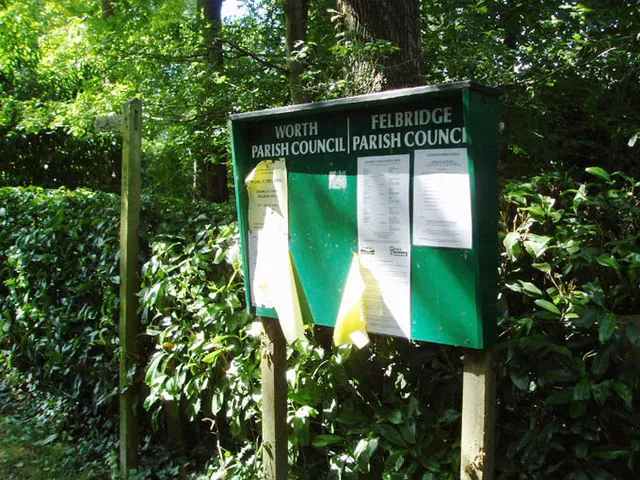
For community groups, the returns route offers a practical, if imperfect, indicator. A parish council that begins to hear repeated reports of misdelivered or returned mail is not necessarily witnessing a collapse in postal standards. It may be witnessing a change in occupancy — a turnover of tenants, a cluster of new-build properties not yet properly registered, a care home that has changed its name, a farm that has been split into two holdings.
That distinction matters. A campaign that attributes every returned letter to service failure risks misreading the evidence. A campaign that ignores returned letters misses a genuine warning sign. The disciplined approach is to record, not to assume: which addresses, what kind of mail, how often, and whether the sender was told.
Rural areas present a particular version of the problem. Long driveways, hamlets without street names, properties known locally by a farm name rather than a postal address, and postcodes that cover a wide scatter of buildings all increase the chance that an item will be mis-sorted or returned. In places where the postcode is the only reliable locator, an error in it is not a minor inconvenience; it is a failed delivery.
Churn, Not Carelessness
The temptation is to frame undeliverable mail as a story about carelessness — the sender who mistyped, the resident who forgot to redirect. There is some of that. But the larger driver is churn. Britain moves house constantly, and every move creates a window in which the old address still circulates on databases, mailing lists and the back of an envelope.
Redirection is the formal answer, but it is a paid service with a fixed term, and it does not cover every kind of correspondence. A neighbour who knows the new occupant can be more effective than any system, which is why the informal networks of a street — the person who takes in parcels, the one who knows which house is empty — remain part of the postal infrastructure, however little they appear in the service standards.
A Practical Protocol for Residents and Local Groups
Several modest steps reduce the volume of mail that enters the returns route.
- Put a return address on the back. It is the single most effective way to ensure that an undeliverable item comes back to you rather than disappearing.
- Check the postcode, not just the street. The final line of an address is the one that routes the item. An accurate postcode is worth more than a verbose address line.
- Redirect, and tell the people who matter. A redirection covers the general flow, but a direct note to a bank, a surgery or a solicitor closes the gaps.
- Report repeated misdeliveries formally. A pattern logged with the delivery office and, if necessary, raised with the regulator carries more weight than isolated complaints.
- Keep a local record. A simple log kept by a parish council or residents' association — date, address, type of mail, outcome — turns anecdote into evidence.
What to Ask For
Communities worried about postal reliability should ask a specific question of their delivery office and their MP: how many items are being returned from this area, and why? The answer may be that address data needs updating, or that a redirection service is being underused, or that a new development has not been properly registered. Each of those has a remedy.
The returns route is not glamorous. It will not feature in a manifesto. But it is where the postal service meets the reality of a changing country, one envelope at a time. A campaign that defends the last mile should also defend the address at the end of it — and understand what happens when the two no longer match.