The Map in the Postie’s Head: Auditing What a Round Cannot Record
A rural round can look straightforward on paper. A line traces a lane, a cluster of postcodes marks a hamlet, and a timetable assigns an expected finish. What the map cannot show is the gate that must be lifted rather than pushed, the path that floods after two days of rain, the farm track that is passable in summer and impassable by January, or the resident who is hard of hearing and appreciates a knock rather than a letter pushed through a draughty porch.
That knowledge lives with the postal worker who has walked the round for years. When that worker retires, moves to another duty or leaves the organisation, the map stays but the memory goes. For communities concerned about postal reliability, this is not a sentimental loss. It is an operational one.
The knowledge that never makes it onto the frame
Royal Mail rightly plans routes by geography and workload. But every round also contains a layer of tacit knowledge: the practical intelligence that accumulates through repetition. It includes which letterboxes are stiff, which shared drives have unclear numbering, which businesses need their post before opening, and which cul-de-sacs are difficult for a van to turn in safely. It includes the small judgments that save time and prevent mistakes — where to park, which doorbell works, which side gate is the correct one, and which dog is usually behind the hedge but not always.
In towns, a new postal worker may be able to absorb some of this quickly because the alternatives are close at hand. In rural areas, the cost of not knowing is higher. A missed turn can add miles. A locked gate can mean a failed delivery. A misunderstanding about access can turn a routine morning into a return-to-office journey. None of this appears in a route map, and very little of it is captured in a formal handover unless someone deliberately records it.
The issue is not that individual postal workers are unwilling to share what they know. It is that handovers are often compressed. A retiring postie may be given a brief overlap with a successor, or none at all. A regular relief worker may cover the round, but relief itself can be stretched. Knowledge that took years to build can disappear in a fortnight.
Why this is a reliability question
Reliability is usually measured in days, percentages and targets. Those measures matter, but they can obscure what happens at the doorstep. A service can appear broadly stable while a particular round becomes less certain because the person who knew its rhythms has gone.
When tacit knowledge is lost, the first effects are small: more attempted deliveries that fail, more items returned to the delivery office, more time spent finding the right entrance. Over time, those small effects can harden into a pattern. Residents begin to expect delays. Businesses adjust their plans. Vulnerable households worry about important correspondence. The loss of one experienced worker should not be enough to cause that, but in a fragile route it can be the factor that tips a round from dependable to unpredictable.
This is especially relevant in rural and dispersed communities, where the distance between the letterbox and the nearest alternative access point is often measured in miles rather than minutes. The last mile is not only a road; it is a set of local conventions. If those conventions are not passed on, the service becomes less efficient and less fair.
Safety, vulnerability and the knock at the door
There is also a safety dimension. Postal workers operate alone for much of the day. Local knowledge helps them avoid unnecessary risks: the lane with no passing places, the property with an unstable step, the route that becomes isolated in bad weather. A new worker may learn these things through experience, but experience can be costly.
Then there is the human side of the round. Royal Mail is not a social care service, and it should not be treated as one. But postal workers are among the few people who see some households regularly. They notice when post is piling up, when a normally tidy garden becomes overgrown, or when a resident who usually comes to the door does not answer. That awareness is not a formal duty, but it can be a quiet safeguard.
When a regular postie leaves, that informal continuity can break. A resident who needs a knock, a moment’s patience or a familiar voice may simply receive a leaflet through the door instead. The result is not necessarily a complaint; it is a missed connection. For a community, the loss is felt in small ways that statistics rarely capture.
A handover audit communities can request
A simple response is to ask for a structured route handover audit whenever a regular postal worker leaves, retires or moves to a new duty. The aim is not to interfere in management or to demand personal information. It is to ensure that operational knowledge is recorded, reviewed and passed on before it disappears.
A route handover audit could be proportionate and practical. It would not require a detailed dossier on every resident. It would record the things that affect delivery, safety and access, using categories rather than unnecessary personal detail. Where information about a resident’s needs is relevant, it should be held only with consent and only for as long as it is needed.
The audit could cover:
- Route segments and seasonal hazards — lanes liable to flooding, icy slopes, overgrown paths, temporary roadworks and any access changes that occur through the year.
- Property access and safe approaches — gates, steps, shared drives, keypads, intercoms, letterbox locations and parking restrictions that are not obvious from the road.
- Communication needs — where a knock, a call or extra time is helpful, recorded only with the resident’s agreement and in line with data protection rules.
- Timing dependencies — businesses that need early delivery, care settings with set routines, schools, farms and other premises where timing affects whether post can be received safely.
- Local contacts and escalation — parish council, village hall, site manager or other appropriate contacts who can help resolve access questions.
- Shadowing and review — a period of accompanied working before the regular postie leaves, followed by a review four to six weeks after the change to identify what was missed.
What to ask for
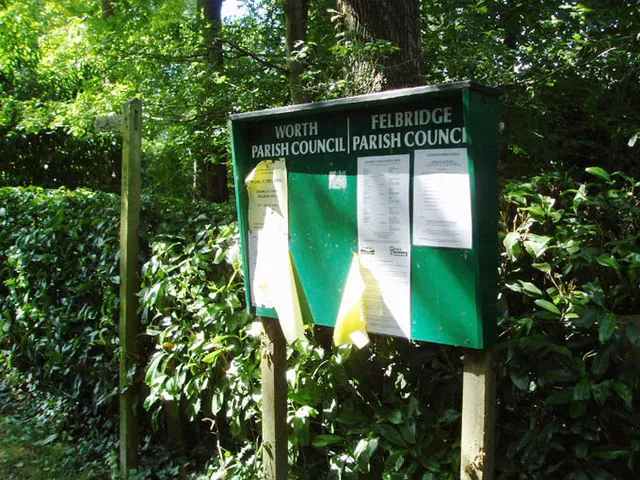
Communities can raise this through parish and town councils, local representatives and direct correspondence with Royal Mail management. A reasonable request would be for confirmation that a handover audit has taken place, a summary of the categories covered, and an opportunity for local feedback after the transition. The summary need not include sensitive personal data. It should be enough to show that the route’s practical knowledge has been considered rather than assumed.
The request should also recognise the pressures on local managers and staff. The point is not to create a new bureaucratic burden. It is to make better use of knowledge that already exists before it walks out of the door. A short, standard handover template, completed with the departing worker and reviewed with the successor, would be a modest safeguard.
A modest safeguard, not a nostalgia exercise
It is easy to talk about the departing postie as a figure of local affection. That affection is real, but it is not the main issue. The main issue is that a round is a piece of infrastructure made of roads, doors and habits. The habits are part of how the infrastructure works.
Preserving that knowledge is not about resisting change. It is about making change safely. When a postal worker leaves, the community should not have to discover the gaps one failed delivery at a time. A route handover audit would give Royal Mail a practical way to carry experience forward — and give residents a clearer basis for asking whether the service they rely on has been properly handed over.