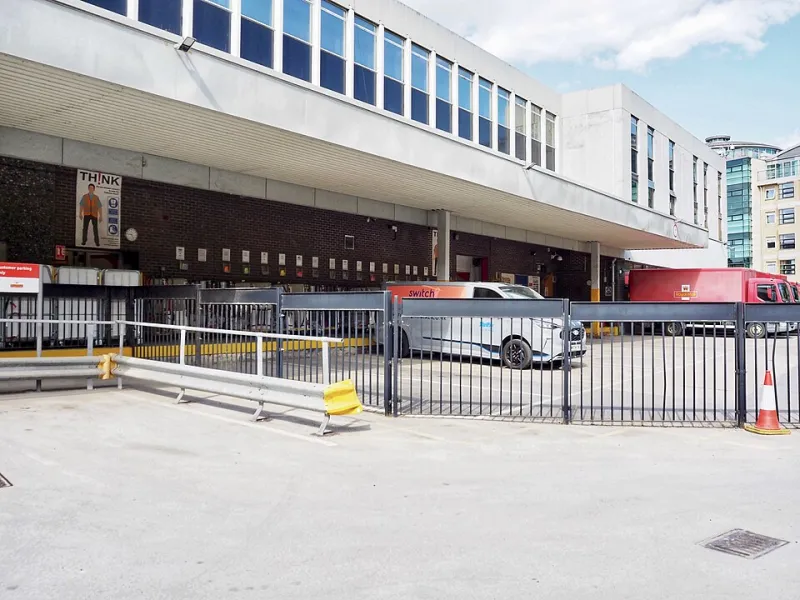
The Counter Without a Counterpart: What an Access Point Cannot Do

On paper, the arithmetic can look reassuring. A network map is redrawn, a parcel locker appears outside a supermarket, a convenience store begins accepting returns, and the count of so-called access points holds steady or even rises. In 2026, that arithmetic is central to how postal change is explained to communities. It is also where the argument too often stops.
An access point is not the same thing as a post office, and a locker is not a counter. The distinction is not pedantry. It goes to what people can actually do, who can do it without help, and what happens when a transaction needs a person rather than a screen. Save Our Royal Mail does not oppose every new access point; lockers and partner counters can be useful additions. The campaign's concern is the substitution of a countable door for an accountable service.
Counting Doors Is Not Counting Duties
A post office counter is a place where a trained member of staff handles a range of transactions under one roof. An access point may be a locker, a shop counter, a drop-off point or a label-printing terminal. Each can serve a purpose. None is automatically a substitute for the full range of duties that communities associate with a staffed postal service.
The word access describes arrival. It does not describe assistance, advice, verification, cash handling, proof of posting or the resolution of a problem. A community can gain an access point and still lose a service. That is the gap this analysis asks readers to watch.
Older Customers: Help, Not Just Hardware
For many older residents, the value of a counter is not only the transaction. It is the assistance: a person who knows the forms, explains the options, checks the address, handles the payment and provides a receipt without assuming a smartphone. A locker that requires an app, a card payment and a printed label is not accessible to everyone, even if it is technically within walking distance.
Accessibility is also about confidence. A frail customer may manage a short queue in a warm, staffed branch but not a windswept locker bank beside a car park. A person with a hearing or vision impairment may need face-to-face help that a screen cannot provide. These are not edge cases. They are the everyday tests of whether a postal network is genuinely public.
Small Businesses: The Receipt Is Part of the Service
Small traders rely on more than a drop-off. They need predictable cut-off times, proof of posting, advice on packaging, and a record that can be used if an item goes astray. A locker may generate a code. It does not necessarily provide the counter conversation that turns a parcel into an evidenced transaction.
For a market trader, an eBay seller or a village shop posting orders, the difference matters. A late acceptance scan or an unclear receipt can become a customer dispute. An access point that cannot issue the right proof, or cannot handle the size or value of the item, is not a like-for-like replacement. It is a different service with a different risk profile.
Cash, Returns and the Urgent Letter
Cash deposits are a Post Office banking function, not a parcel locker function. A locker does not accept cash, count it, verify it or issue a deposit record. If a local service is reduced to a locker and a returns label point, residents who rely on the Post Office for banking will have lost something that the access-point count does not measure.
Returns have their own requirements. A label may be printable at home, but not every customer has a printer. A barcode may be scannable, but the customer may still need proof that the item was accepted. Urgent mail is stricter again: guaranteed services depend on acceptance within cut-off times and a record that the guarantee has begun. A locker at the edge of a car park may be convenient, but convenience is not the same as a guaranteed service.
What Network Change Can Leave Out
When a service is redescribed as a network change, the public should look for the details that a headline count can hide: travel distance to the nearest staffed counter, bus routes and winter conditions, opening hours, queue times, privacy at the counter, staff training and the range of transactions available. In rural areas, the nearest alternative may be several parishes away and inaccessible without a car.
An equality impact assessment should test those points, not merely count replacement points. A consultation that asks whether residents are content with an access point, without publishing what that point can do, is not a meaningful test of service. It is a test of endurance.
Questions to Ask Before You Accept the New Map
- Which specific transactions will remain available at the new point, and which will not?
- Will a trained person be present, at what times, and with what privacy and accessibility?
- How will proof of posting, tracking and acceptance scans be issued?
- Can the point handle cash deposits, returns, large parcels and urgent mail?
- What is the travel distance and public transport journey from the area losing a counter?
- Has an equality impact assessment been published, and does it consider older and disabled residents?
- Who decides, on what timetable, and what happens if the access point operator withdraws?
A Complement, Not a Replacement
Access points should be judged as additions to a service, not as evidence that the service has survived. A mature network plan would publish a service matrix for every replacement point, show what is lost as well as what is gained, and allow communities to test the claim against their own needs. Until then, residents should treat more access points as a question rather than an answer. The counter without a counterpart is not a post office. It is a different thing, and it should be described as one.