The Complaint That Carries Weight: Building a Postal Record a Regulator Can Read
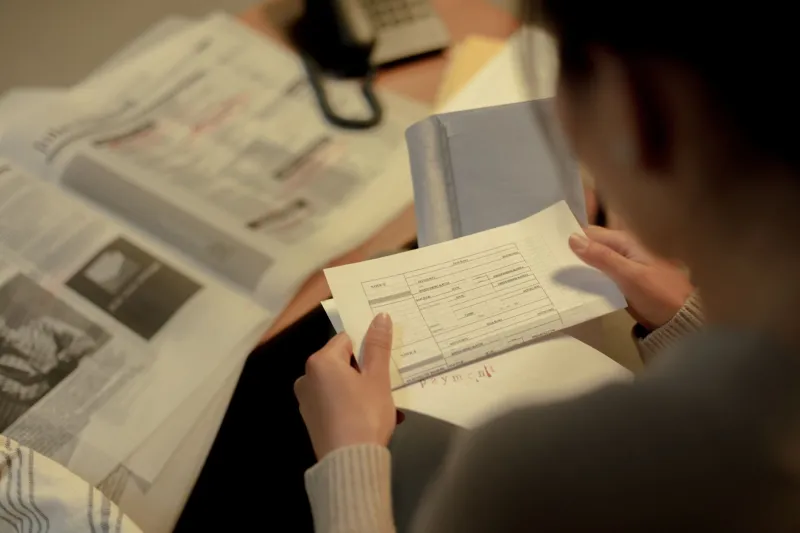
When a delivery goes missing, the first instinct is often to telephone the local depot. That is understandable, but a telephone call leaves little behind. A postal complaint gains force when it is written down, dated and tied to a specific address, route or collection point. The aim is not to manufacture a dispute. It is to create a fair and accurate record that Royal Mail can investigate and that Ofcom, the postal regulator, can read as evidence of a wider pattern.
For residents and community groups, the task is to move from anecdote to documentation. That means treating each failure as part of a sequence, while still giving Royal Mail a proper opportunity to put things right. A complaint that is specific, chronological and supported by evidence is more likely to be examined than a general complaint about the post being poor.
Begin at the doorstep, not the phone
Before contacting Royal Mail, assemble the facts. Keep original envelopes, failed delivery slips and any tracking references. Photograph the slip if it is likely to fade or be lost. Note the date and time of the expected delivery, the date of any attempted delivery and the date on which the item eventually arrived, if it arrived at all.
A useful household record should include:
- the full postal address and, where known, the delivery office or round;
- the date and time of each failure or delay;
- whether the item was ordinary correspondence, a parcel, a legal document, a medical letter or a financial notice;
- any tracking number or reference;
- whether a failed delivery slip was left, and what it said;
- photographs of the slip, the letterbox or the access point where relevant;
- the practical impact, such as a missed appointment, a late payment or a lost business document.
Resist the temptation to include only the most dramatic examples. A run of small failures across several weeks can be more persuasive than a single unusual incident. The record should be accurate, not inflated.
Make the first complaint specific
Use Royal Mail's published customer service channels and put the complaint in writing where possible. State clearly that you are making a formal complaint, not simply reporting a delay. Ask for a complaint reference and for confirmation of when you will receive a response.
A strong first complaint does four things. It identifies the address and the dates concerned. It describes what should have happened and what actually happened. It sets out the remedy sought, whether that is an explanation, a rescheduled delivery or compensation under the relevant scheme. It also asks Royal Mail to confirm what it has done to prevent a recurrence.
Avoid broad allegations that are difficult to prove. Phrases such as the post is always late are less useful than a dated list showing that four items expected on separate days arrived together nine days later. Keep a copy of every message and note the date of any telephone call, together with the name of the person spoken to if it is given.
Escalate beyond the local depot
If the first response does not resolve the matter, ask for the complaint to be reviewed by Royal Mail's complaints team. Provide the original reference and a short covering note explaining why the response was inadequate. Keep the tone factual. A complaint that is calm and well ordered is easier to act upon than one that is long and angry.
If the matter remains unresolved, ask about the next stage available under Royal Mail's complaints procedure. In some circumstances, unresolved postal complaints can be taken to the Postal Redress Service, commonly known as POSTRS. Eligibility rules and time limits should be checked at the time, as they can change. If Royal Mail issues a deadlock letter or a final response, keep it. It may be needed for the next stage.
Do not assume that escalation means confrontation. The purpose is to move the complaint from a local operational question to a recorded service failure that someone with authority can examine.
What the regulator can and cannot do
Ofcom does not resolve individual delivery complaints in the same way as an ombudsman. Its role is to monitor the postal market and to consider whether companies are meeting their obligations. Individual complaints can still be valuable because they show where services are failing and whether problems are isolated or systemic.
When writing to Ofcom, keep the submission concise. Provide a summary of the dates, addresses and types of failure, together with a sample of supporting evidence. Do not send hundreds of unlabelled pages. A short chronology and a clear statement of the pattern are more useful than a large bundle that is difficult to interpret.
Why a street or village changes the calculation
A single household reporting a missed delivery may be treated as an isolated case. A street, estate or village reporting the same problem over the same period is harder to dismiss. Aggregated complaints show that the issue is not simply one person's experience. They can reveal a route, a delivery office, a staffing gap or a collection point that is consistently failing.
Community groups should collect evidence with consent and care. Parish councils, residents' associations and neighbourhood groups can act as recorders, but they should not publish personal details. A simple summary is often enough: the number of households involved, the dates covered, the types of mail affected and the responses received from Royal Mail.
A simple community complaint model
A workable model needs three roles: a recorder, a reviewer and a correspondent. The recorder gathers dated reports from households. The reviewer checks that the evidence is consistent and that personal information is handled properly. The correspondent sends the consolidated complaint to Royal Mail, copied to the local MP or councillor where appropriate, and keeps a log of replies.
Data protection matters. Collect only what is needed, store it securely and tell contributors how their information will be used. Individual complaints should remain individual. The community summary should support them, not replace them.
Keep the file alive
A complaint trail is not finished when the first letter is sent. Note the date by which a response is due, follow up politely if it does not arrive and record what Royal Mail says. If service improves, record that too. A credible file includes good news as well as bad, because it shows that the complainant is keeping an honest record rather than building a case for its own sake.
The test is simple: could a stranger read the file and understand what happened, when it happened and what was done about it? If the answer is yes, the complaint has weight. For communities working with Save Our Royal Mail, that paper trail is not bureaucracy. It is the practical means by which repeated failures become a service issue that decision-makers can no longer overlook.